Barbara Czarniawska Book Prize
NFF Book Prize in honor of Barbara Czarniawska (1948-2024)
This bi-annual prize is dedicated to honoring the memory of the late Professor Barbara Czarniawska (1948-2024) who was a renowned writer and dedicated PhD supervisor who made significant contributions to the field of management and organization studies (MOS).
The prize is awarded at the NFF conference every other year.
The prize criteria is following:
- Awarded to the authors of a monograph in the fields of management and organization studies, addressing a societal phenomenon of contemporary relevance from a processual perspective.
- Monographs published in the two (2) full years preceeding a conference can be considered for the prize.
- The book prize committee will assess the proposed monographs.
- Scholars affiliated with NFF member institutions can nominate monographs for the prize. Nominations must be submitted to the prize committee by e-mail to: bc.prize@nordicacademy.org no later than February 1, in the year of the relevant NFF conference. (Next nominations will be accepted for the 2028 award.) In addition to nominations from the NFF community, the prize committee will look out for monographs to be considered for the prize.

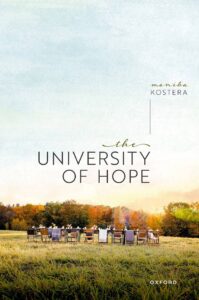
The first NFF Barbara Czarniawska Book Prize was awarded in August 2026 at the NFF conference in Aarhus. Congratulations to the winner Monika Kostera for her book The University of Hope (Oxford University Press)!
The prize committee received a number of strong nominations for the first book prize. The committee describes the winning book as follows:
- Theoretically rich, empirically resonant, and unusually readable, contributing to the exciting “writing differently” movement in organizational studies.
- It speaks not only to organization scholars, but also to broader debates on the future of public institutions and academic work.
- The author examines how neo-liberal forms of organizing reshape academic identities, relations and practices over time. What makes this monograph particularly compelling is its ability to critically diagnose competition, managerialism, and academic alienation.
- The book offers a vocabulary of hope ground in collegiality, care, humility, and democratic organizing – something we really need to cultivate in contemporary academia.
Interview with Monika Kostera